Your company’s data got breached. Customer information leaked. Operations shut down for three days. Legal fees piling up. Sound like a nightmare? For thousands of businesses in 2025, it’s reality.
PLFTiger is an AI-powered cybersecurity platform designed to prevent exactly these disasters. Unlike traditional antivirus programs that just scan for known viruses, PLFTiger combines artificial intelligence, real-time threat monitoring, and multi-layered defense systems to protect against both common and sophisticated cyberattacks. It’s built for the modern threat landscape where hackers aren’t just looking for passwords anymore—they’re targeting everything from cryptocurrency wallets to medical records.
Here’s why this matters: cybercrime costs hit $10.5 trillion globally in 2024, up over 300% from five years ago. Old-school firewalls can’t keep up. PLFTiger approaches security differently by predicting threats before they happen rather than just reacting after damage is done.
What Makes PLFTiger Different From Regular Security Software
Think about how traditional security works. You install antivirus software. It scans your files. If it recognizes a virus signature from its database, it blocks it. Problem is, hackers create new threats faster than signature databases update.
PLFTiger flips this model. Instead of waiting to recognize known threats, it uses machine learning to understand normal behavior patterns. When something deviates—like an employee suddenly accessing sensitive files at 3 AM or unusual login attempts from a foreign country—the system flags it immediately.
The platform doesn’t rely on a single defense layer either. It stacks multiple protective measures: encryption for data at rest and in transit, behavioral analytics that learn your network’s normal rhythms, automated threat responses that contain problems before they spread, and continuous monitoring that never sleeps.
This matters because modern cyberattacks are sophisticated. Ransomware doesn’t just encrypt your files anymore—it exfiltrates data first, then threatens to leak it if you don’t pay. Phishing attempts impersonate your actual colleagues with frightening accuracy. PLFTiger’s layered approach means even if attackers bypass one defense, multiple backup systems are ready.
Core Features That Actually Matter
AI-driven threat detection sits at PLFTiger’s core. The system analyzes millions of data points daily, learning what normal operations look like for your specific environment. When something’s off—even if it’s a brand-new attack method that’s never been documented—the AI spots the anomaly and raises alerts.
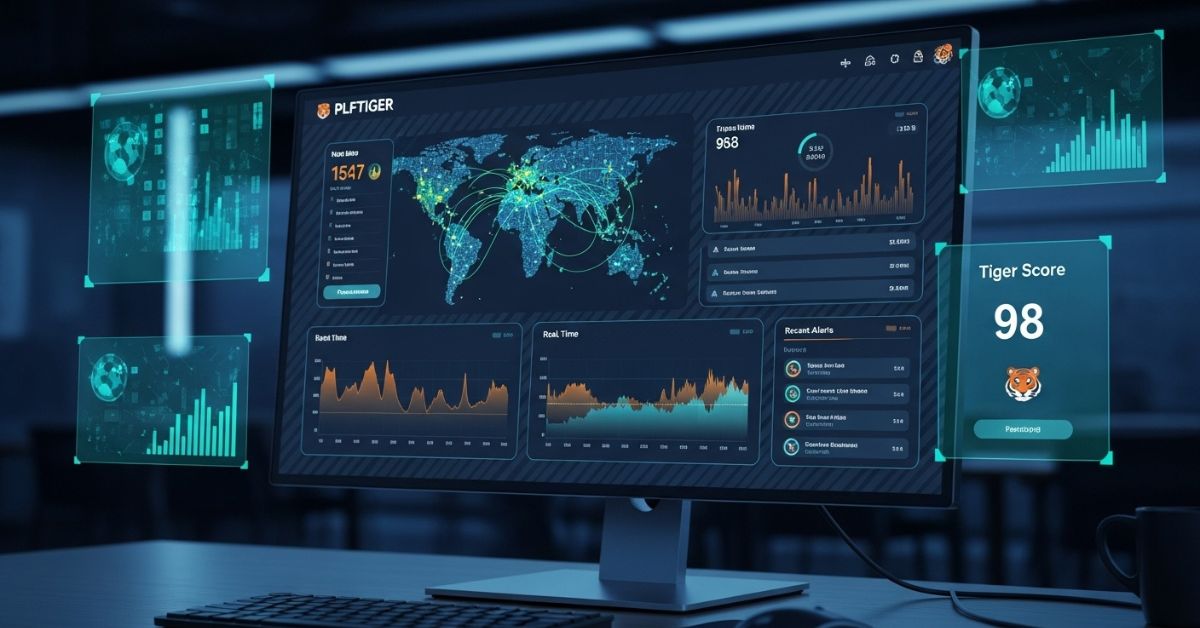
Real-time monitoring means PLFTiger watches your networks, devices, and cloud environments constantly. You’re not getting daily reports about yesterday’s suspicious activity. You’re getting instant notifications when threats appear, giving security teams the chance to respond within minutes instead of discovering breaches weeks later.
End-to-end encryption protects sensitive information whether it’s sitting on servers or traveling across networks. Even if attackers somehow access encrypted data, they can’t read it without the proper decryption keys. This becomes critical for businesses handling customer financial data, healthcare records, or proprietary intellectual property.
User-friendly dashboards make cybersecurity accessible to people who aren’t security experts. You don’t need a computer science degree to understand the threat alerts or take appropriate action. The interface translates complex security data into clear, actionable insights that anyone can use.
Cloud security integration extends protection to cloud-based operations. As companies migrate more infrastructure to AWS, Azure, or Google Cloud, PLFTiger ensures those environments stay secure. It monitors cloud storage, applications, and virtual machines with the same rigor as on-premise systems.
How PLFTiger Actually Works in Practice
When you deploy PLFTiger, it starts by mapping your entire digital environment. Every device, every user account, every application gets catalogued. The system builds a baseline understanding of normal activity patterns.
From there, continuous scanning begins. PLFTiger watches network traffic, file access patterns, login attempts, data transfers—essentially everything happening in your digital ecosystem. Machine learning algorithms process this information, constantly updating their understanding of what’s normal versus what’s suspicious.
If a ransomware attack attempts to encrypt files, PLFTiger doesn’t wait for a signature match. It recognizes the abnormal behavior—rapid file modifications, unusual encryption activities—and triggers immediate containment protocols. The affected systems get isolated from the network, preventing the ransomware from spreading while security teams investigate.
For businesses, this seamless integration happens without slowing down operations. Employees don’t notice added friction in their workflows. The system runs quietly in the background, only intervening when genuine threats appear.
Who Benefits Most From PLFTiger
Small to medium businesses face significant cybersecurity challenges without enterprise-level security budgets. PLFTiger provides sophisticated protection at accessible price points. A small accounting firm handling sensitive client financial data can deploy protection previously available only to Fortune 500 companies.
Healthcare organizations must comply with strict regulations like HIPAA while protecting patient data from increasingly targeted attacks. Medical records fetch high prices on dark web markets, making healthcare a prime target. PLFTiger’s encryption and access controls ensure patient information stays protected while maintaining compliance documentation.
Financial institutions deal with constant fraud attempts and must protect customer accounts from sophisticated threats. PLFTiger’s behavioral analytics detect unusual transaction patterns that might indicate account takeovers or fraud attempts, often stopping attacks before money moves.
Remote workforces create unique security challenges. When employees access company systems from home networks, coffee shops, or hotels, traditional perimeter defenses don’t work. PLFTiger protects endpoints regardless of location, ensuring remote laptops stay secure even on untrusted networks.
Cryptocurrency users need robust protection for digital wallets and exchange accounts. PLFTiger’s real-time monitoring catches unauthorized access attempts and unusual transactions before significant losses occur.
Common Cybersecurity Mistakes PLFTiger Prevents
Relying solely on password protection leaves organizations vulnerable. Even complex passwords get compromised through phishing or credential stuffing attacks. PLFTiger adds behavioral verification—even with correct passwords, suspicious login patterns trigger additional verification steps.
Ignoring insider threats causes roughly 30% of data breaches. Disgruntled employees or compromised accounts belonging to legitimate users bypass traditional perimeter defenses. PLFTiger monitors internal activity just as rigorously as external threats, catching anomalous behavior from authorized users.
Neglecting cloud security happens when businesses assume cloud providers handle all security. Cloud providers secure their infrastructure, but customer data protection remains the customer’s responsibility. PLFTiger bridges this gap with dedicated cloud monitoring and protection.
Delayed threat response turns minor security events into major breaches. The average time to discover a breach is 207 days—over six months. PLFTiger’s real-time alerts slash this to minutes, dramatically reducing potential damage.
Incomplete visibility across hybrid environments leaves blind spots attackers exploit. When security teams can’t see everything happening across on-premise servers, cloud applications, and mobile devices, threats slip through. PLFTiger provides unified visibility across your entire digital infrastructure.
Setting Up PLFTiger: What to Expect
Initial deployment typically takes 2-4 weeks depending on your environment’s complexity. The process starts with discovery—PLFTiger’s systems map your network, identify devices and applications, and establish baseline activity patterns.
During setup, you’ll configure security policies tailored to your organization’s needs. A healthcare provider might prioritize patient data protection with strict access controls. A software development firm might focus on protecting source code and customer databases.
Training requirements are minimal. Because PLFTiger prioritizes user-friendly interfaces, most employees need only basic orientation. Security teams get more in-depth training on interpreting alerts and managing responses, but even this training typically completes within a few days.
Integration with existing systems happens through standard APIs and connectors. PLFTiger doesn’t require ripping out your current infrastructure. It works alongside existing tools, enhancing rather than replacing what you’ve already invested in.
Real-World Performance and Results
Organizations implementing PLFTiger report significant improvements in threat detection speed. Where previous systems might take hours or days to identify suspicious activity, PLFTiger alerts appear within minutes.
False positive rates—alerts about non-threatening activity—decrease substantially compared to signature-based systems. The AI’s behavioral learning reduces unnecessary alarms while catching genuine threats other systems miss.
Businesses see cost savings beyond preventing breaches. Automated threat responses reduce the workload on security teams, allowing smaller teams to manage larger infrastructures effectively. This translates to lower staffing costs while maintaining strong security postures.
Compliance becomes simpler with automated documentation and audit trails. When regulators or auditors request security records, PLFTiger provides comprehensive logs showing exactly who accessed what data and when, demonstrating compliance with data protection regulations.
Understanding the Investment
PLFTiger pricing typically follows tiered subscription models based on organization size and required features. Small businesses might pay $200-500 monthly for basic protection covering 25-50 users. Mid-size organizations with 500+ users generally invest $2,000-5,000 monthly for enterprise features.
This cost must be weighed against breach expenses. The average data breach costs businesses $4.45 million according to 2024 data. For small businesses, a single breach often means bankruptcy. Spending a few thousand annually on prevention makes considerably more financial sense than risking million-dollar losses.
Additional benefits include reduced cyber insurance premiums. Many insurers offer discounts to organizations deploying advanced security platforms like PLFTiger, recognizing the reduced risk profile.
The Cybersecurity Landscape PLFTiger Addresses
Cyber threats aren’t slowing down. Attackers increasingly use AI themselves to create more convincing phishing emails, discover vulnerabilities faster, and automate large-scale attacks.
Ransomware-as-a-service platforms let even non-technical criminals launch sophisticated attacks. Supply chain attacks compromise trusted software, injecting malware that traditional security misses. Nation-state actors target critical infrastructure with resources far exceeding typical corporate security budgets.
PLFTiger’s continuous learning architecture adapts to these evolving threats. As attackers develop new techniques, the platform’s AI adjusts detection parameters, staying current without requiring constant manual updates.
Regulatory requirements also intensify. GDPR fines reach millions for privacy violations. Healthcare organizations face massive penalties for HIPAA breaches. Financial institutions must comply with increasingly strict data protection standards. PLFTiger helps organizations meet these requirements through comprehensive security controls and documentation.
Limitations and Considerations
PLFTiger isn’t a magic solution that eliminates all cybersecurity risks. No platform can guarantee 100% protection. Determined attackers with sufficient resources might still find ways through, though PLFTiger makes such breaches significantly harder and more expensive for attackers.
The platform requires some technical expertise for optimal configuration and management. While the interface is user-friendly, getting maximum value means having security professionals who understand how to tune policies and respond to alerts appropriately.
Implementation can be disruptive initially. During the discovery and baseline-building phase, organizations might see numerous alerts as the system learns normal operations. This settles down within a few weeks, but expect some adjustment period.
Cost might be prohibitive for very small organizations or individual users, though the expense typically justifies itself for anyone handling sensitive data or facing significant cyber risk.
Where Cybersecurity Is Heading
The future points toward increasingly automated security responses. PLFTiger already implements automated containment for certain threat types. Future developments will likely expand this, with AI systems handling more threat response autonomously while keeping humans in the loop for critical decisions.
Quantum computing represents both opportunity and threat. While quantum computers could break current encryption methods, PLFTiger’s architecture includes quantum-resistant cryptography designed to remain secure even as quantum computing becomes practical.
Decentralized security models are emerging, distributing security controls across multiple systems rather than relying on centralized management. PLFTiger’s architecture aligns with this trend, reducing single points of failure that attackers might exploit.
Zero-trust security principles—never trust, always verify—will become standard practice. PLFTiger already implements zero-trust concepts by continuously validating every access request regardless of source.
Is PLFTiger Right for Your Situation?
Consider PLFTiger if you handle sensitive data that would cause significant damage if leaked. Customer information, financial records, healthcare data, intellectual property—if losing control of this information would hurt your business or your customers, you need robust protection.
If you’ve already experienced breaches or near-misses, PLFTiger addresses the gaps in your current security. Learning from security incidents is valuable, but only if you implement solutions that prevent recurrence.
Remote work arrangements increase security complexity. If your team works from various locations using different networks and devices, PLFTiger’s endpoint protection and behavioral monitoring become especially valuable.
Regulatory compliance requirements often mandate specific security controls. PLFTiger’s comprehensive documentation and security features help organizations meet these obligations while actually improving security rather than just checking compliance boxes.
What’s your organization’s biggest security concern right now? Identifying your specific vulnerabilities helps determine whether PLFTiger’s feature set addresses your most pressing needs. Start there, and you’ll have a clearer picture of whether this platform fits your security strategy.
Also Read Faccccccccccccc : The Internet’s Most Chaotic Expression Explained